Hemorrhoids: Root Causes & Natural Healing Approach
Hemorrhoids are swollen, inflamed veins in or around the anus and lower rectum.
Think of them as varicose veins in that area—they stretch, bulge, and can get irritated.
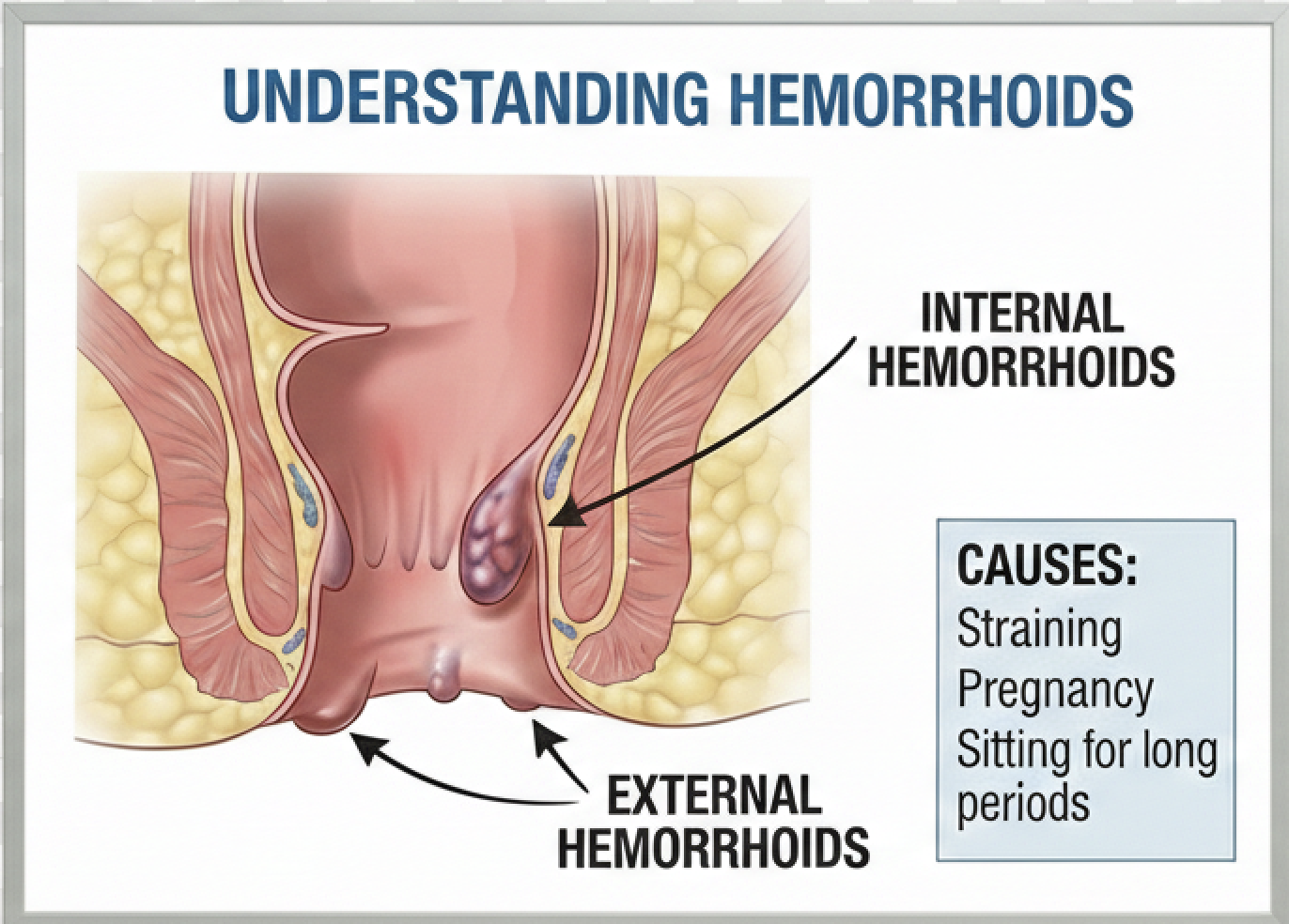
The two main types
Internal hemorrhoids
Inside the rectum
Usually painless
May cause bright red bleeding during bowel movements
Can sometimes bulge outward (prolapse)
External hemorrhoids
Under the skin around the anus
Often itchy or painful
Can swell or form a hard, tender clot (thrombosed hemorrhoid)
Common symptoms
Rectal bleeding (bright red)
Itching or irritation around the anus
Pain or discomfort, especially when sitting
Swelling or a lump near the anus
Hemorrhoids are one of those “everyone has them, few talk about them” conditions.
Here’s what the data consistently shows (with the usual caveat that exact numbers vary by study):
About 1 in 2 adults will experience symptomatic hemorrhoids by age 50
Roughly 5–10% of adults have symptoms at any given time
They’re most common between ages 45–65
Rates are similar in men and women
Pregnancy dramatically increases short-term risk (up to ~40% during pregnancy or postpartum)
One reason prevalence looks “low” in medical records is that:
Many people self-treat and never see a doctor
Mild cases go unreported
Symptoms come and go
Also worth knowing:
👉 Almost everyone has hemorrhoidal tissue (it helps with continence). The problem is when those veins become swollen, inflamed, or symptomatic.
There are many potential contributors to hemorrhoids that I address as a Functional Health Specialist. However, the most common root factors I see include vitamin B12 deficiency, pelvic floor muscle compensation or weakness, insufficient intake of red meat relative to energy demands or current physiological load, and specific dietary irritants.
In many cases, hemorrhoids tend to resolve on their own when individuals begin supplementing with 1,000 mcg of methylated vitamin B12 daily with breakfast, increase their intake of red meat and eggs, and include vitamin C–rich foods such as lemon, lime, organic oranges, or pineapple (approximately 1 cup per day).
If symptoms do not improve within four weeks, a Functional Health Specialist from Healing with Excellence can perform a comprehensive evaluation and provide additional support to ensure complete healing. This includes identifying potential pelvic floor dysfunction through simple neuromuscular assessments and targeted questions, as well as assessing dietary patterns for possible irritants that may contribute to cellular stress and tissue irritation.
Your Functional Health Specialist will work with you to remove the stressors interfering with healing, strengthen supportive systems, and optimize conditions for effective cellular renewal. This approach helps eliminate pain and symptoms while teaching you how to manage and prevent future occurrences.
*The information shared here discusses common factors related to your concern and is meant for educational purposes only. It is not a medical diagnosis or a replacement for professional medical care. Everyone’s body is different, and personalized support or a wellness evaluation may be needed for the best results. Your Functional Health Specialist can support and advocate for you while working alongside your medical providers.
Sources: https://www.niddk.nih.gov/health-information/digestive-diseases/hemorrhoids and https://medlineplus.gov/hemorrhoids.html and https://www.ncbi.nlm.nih.gov/books/NBK500009/
Written by Kimberly J. Miller — Licensed Massage Therapist, Certified Chinese Herbalist, creator of NRS & CCRT. Full credentials: https://www.healingwithexcellence.com/about