POTS: Root Causes, Symptoms & Natural Support
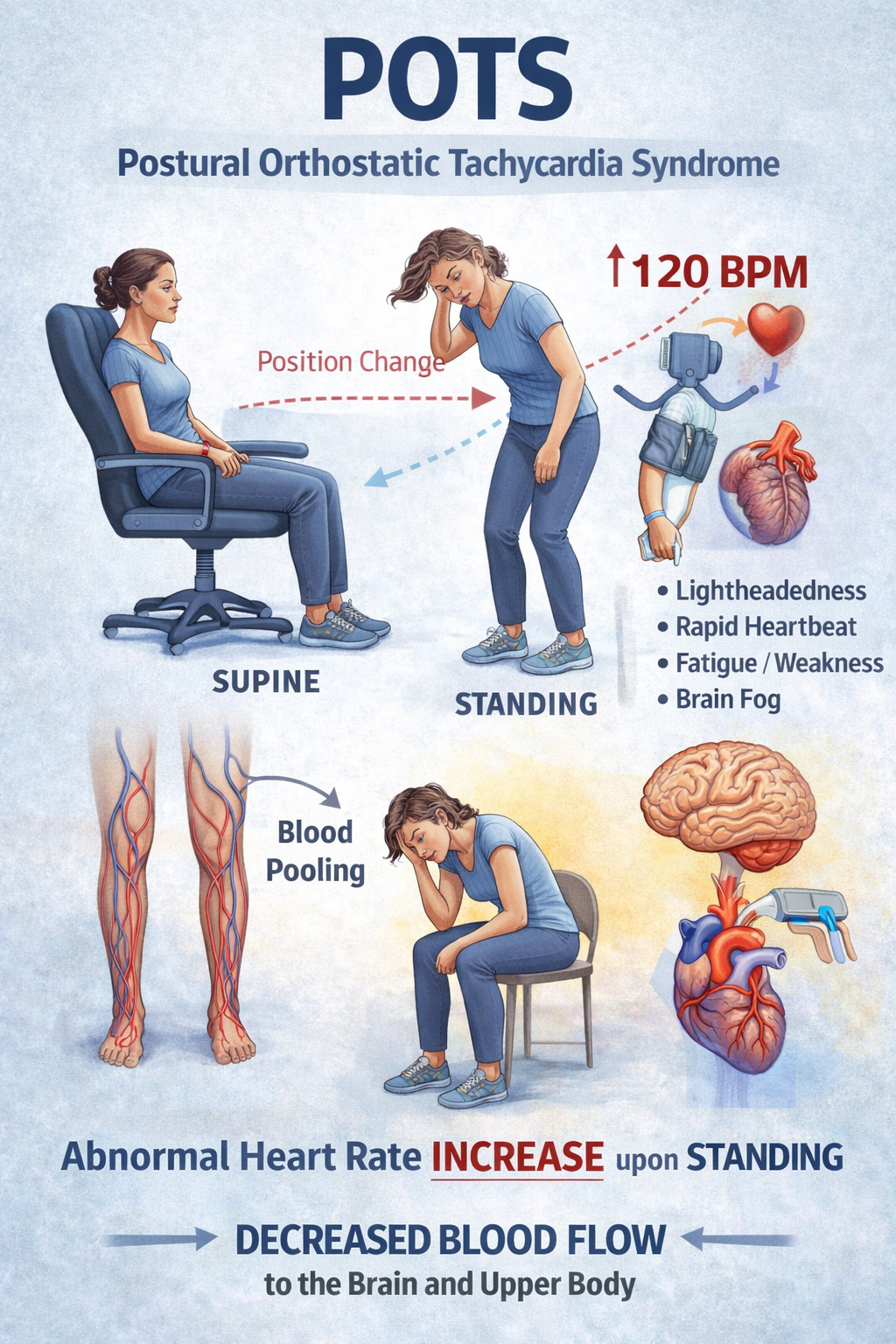
POTS stands for Postural Orthostatic Tachycardia Syndrome. It’s a real, physiological condition (not psychological) that affects how the autonomic nervous system regulates heart rate and blood flow—especially when you change position.
What defines POTS (clinically)
A diagnosis is usually based on:
Heart rate increase of ≥30 beats per minute (≥40 bpm in teens)
within 10 minutes of standing or during a tilt-table test
No significant drop in blood pressure
Chronic symptoms (usually ≥6 months)
Symptoms improve when lying down
Common symptoms
Not everyone has the same mix, but many experience:
Rapid heartbeat when standing
Dizziness or lightheadedness
Fatigue (often severe)
Brain fog / trouble concentrating
Shortness of breath
Exercise intolerance
Nausea, bloating
Heat intolerance
Trembling, anxiety-like sensations
Fainting or near-fainting
Important: it can feel like anxiety, but the mechanism is different.
What’s happening in the body
When you stand up, gravity pulls blood toward your legs.
In POTS:
Blood doesn’t return efficiently to the heart
The body compensates by increasing heart rate excessively
The nervous system misfires in regulating circulation
Think of it as a communication problem, not a weak heart.
Who gets POTS most often
More common in women
Often begins between ages 15–50
Can appear after:
Viral illness (including COVID)
Pregnancy
Surgery
Concussion
Significant stress or trauma
Periods of deconditioning
Subtypes (overlapping, not rigid)
Clinicians sometimes describe:
Neuropathic POTS – impaired nerve signaling in the legs
Hyperadrenergic POTS – excess adrenaline response
Hypovolemic POTS – low blood volume
Secondary POTS – associated with another condition (e.g., autoimmune disease, Ehlers-Danlos syndrome)
POTS care is often challenging, and many people continue to have symptoms despite standard medical treatment. A complementary root-cause approach also considers cellular stress, neuromuscular compensations, vitamin deficiencies, and nutrient imbalances alongside your medical care.
A Functional Health Specialist at Healing with Excellence focuses on identifying the root causes of impaired neural communication that can disrupt heart function and the body’s ability to maintain homeostasis. Common contributors to POTS may include dietary factors, neuromuscular dysfunction, and various cellular stressors. Rather than addressing symptoms in isolation, a Functional Health Specialist evaluates the whole person experiencing POTS-related symptoms.
Care often includes the application of Neuromuscular Restoration protocols and collaboration with practitioners who specialize in this area, while also addressing factors such as past trauma, nutrient deficiencies, food sensitivities, and chemical exposures. This comprehensive approach supports the body’s ability to restore balance and function.
Many critical contributors are frequently overlooked in both conventional and non-conventional care models, limiting optimal outcomes. Healing with Excellence is committed to uncovering these missing pieces and offering meaningful solutions that lead to real results and lasting relief.
*The information shared here discusses common factors related to your concern and is meant for educational purposes only. It is not a medical diagnosis or a replacement for professional medical care. Everyone’s body is different, and personalized support or a wellness evaluation may be needed for the best results. Your Functional Health Specialist can support and advocate for you while working alongside your medical providers.
Sources: https://www.ninds.nih.gov/health-information/disorders/postural-tachycardia-syndrome and https://www.ncbi.nlm.nih.gov/books/NBK541074
Written by Kimberly J. Miller — Licensed Massage Therapist, Certified Chinese Herbalist, creator of NRS & CCRT. Full credentials: https://www.healingwithexcellence.com/about/